
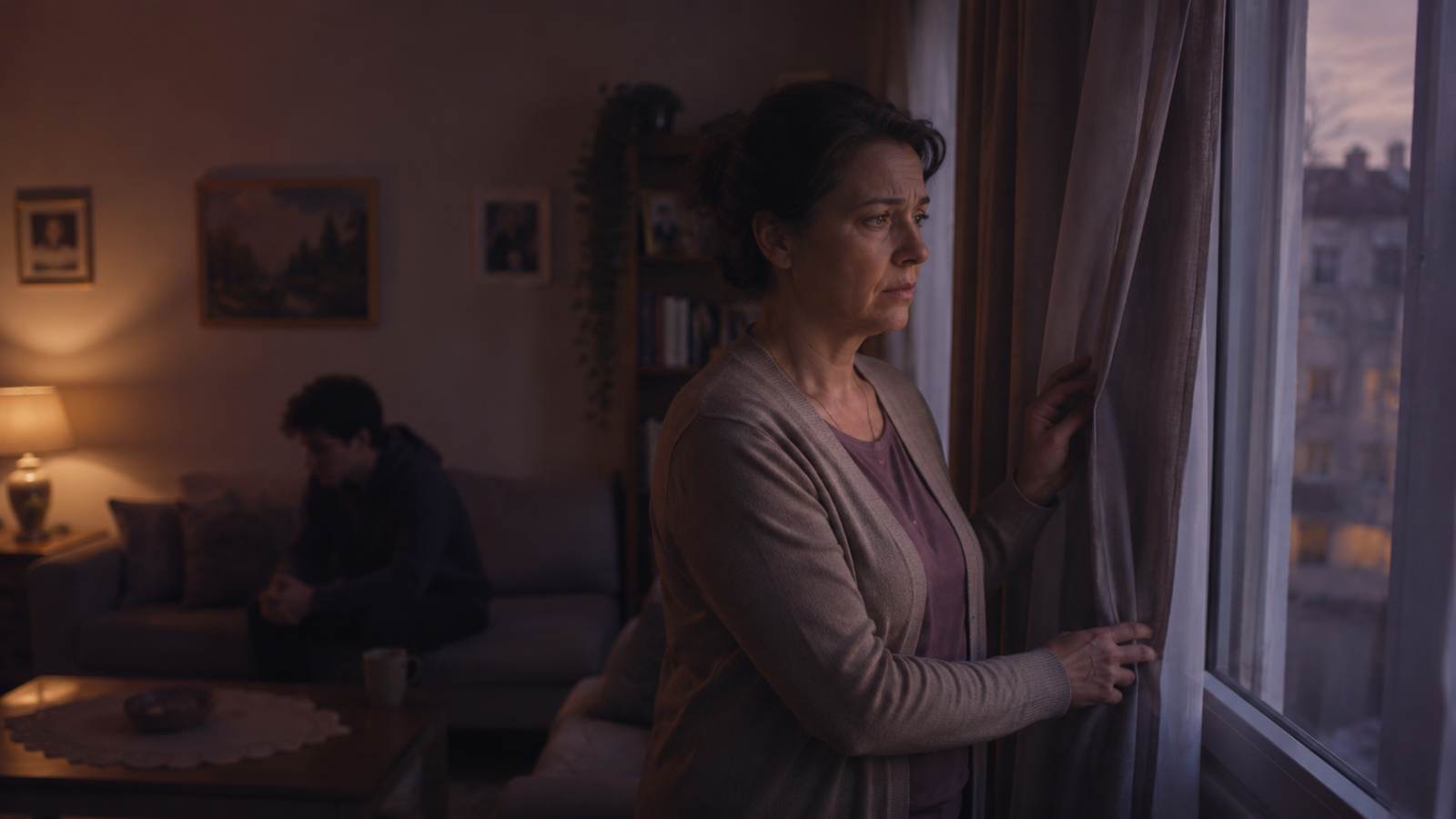
We Romanians have a saying that has destroyed more lives than we would like to admit: “dirty laundry is washed at home.” For families facing the addiction of a loved one, this “washing of the laundry” becomes a daily ritual of hiding, polishing reality, and isolation. Shame is not just an uncomfortable feeling; in the context of addictions, it becomes the wall that blocks the only path toward rescue: specialized help.
If you are the person who stays awake at night waiting for the sound of the key in the door, if you are the one making excuses at work for your wife’s absences, if you are the mother telling relatives that your son is “just tired,” this article is for you. It is time to talk about the stigma that keeps you hostage.
“What will people say?” and our cultural inheritance
We have learned to place too much value on outward appearance, on the façade. We care what the neighbors on the third floor say, what relatives think at Easter meals, and how the community sees us. In our Romanian mindset, the success of a family is often measured by the absence of visible conflict. When addiction appears — whether to alcohol, drugs, gambling, or something else — the family’s first reaction is not “How do we treat this?”, but “What will people say?”.
Stigma is that invisible label society places on the “drunk” or the “drug addict,” but also on their family, which is often seen as guilty or incapable. This social pressure turns the home from a place of safety into a fortress of secrets. Unfortunately, this secret is exactly the environment in which addiction thrives. Addiction loves darkness; it grows when it is protected by lies.
The difference between shame and guilt
It is essential to understand the distinction psychology makes between the two:
- Guilt says: “I did something wrong.” It is connected to a behavior and can motivate us to repair things.
- Shame says: “I am wrong.” It attacks identity.
For a codependent person, shame is internalized. The mother feels like a failed mother. The wife feels like a woman who did not offer enough love. The child feels unworthy of attention. This shame makes you feel “dirty” by association, pushing you to isolate yourself from friends and community. But here is the hard and liberating truth: Addiction is a disease of the family system, not a moral failure of its members.
The myth of “protection”: why silence does not save lives
Many family members believe that by hiding the problem, they are protecting the addicted person. They believe they are saving their dignity or their future. In reality, this “protection” has a name in addiction therapy: enabling.
When you hide the consequences of substance use — paying debts to loan sharks, lying to the employer, cleaning up after the addicted person — you are only allowing them to continue using without feeling the weight of reality. Your shame becomes their shield.
Saving someone’s life means having the courage to say: “I can no longer hide this. I need help, and you need treatment.” The difference between protecting an image and saving a life is often the threshold between life and death.
Addiction as a systemic disease
Imagine the family as a crew in a boat: when the addicted person rocks violently, the others desperately throw themselves to the opposite side so the boat will not capsize. Instead of rowing toward the shore, everyone remains frozen in a painful position just to maintain a fragile balance.
Culturally, we are still struggling with the idea that addiction is a “choice” or a “vice of weak people,” even though it is recognized as a disease by the Ministry of Health and certain specific services are reimbursed by CASS. Modern science tells us clearly: addiction is a complex neurobiological disease that affects the brain’s reward centers.
When you understand that it is a disease, stigma begins to dissolve. You would not feel ashamed if a family member had diabetes or an autoimmune disease, would you? You would look for the best doctor. Addiction requires the same approach. It is not about willpower, but about assisted recovery.
Steps toward freedom from stigma
How can you begin, even today, to tear down the wall of shame?
Accept reality without polishing it
The first step is to look the problem in the face. Stop using euphemisms such as “he’s just a little cheerful” or “he’s going through a stressful period.” Tell yourself the truth: “My husband has a problem with alcohol, and I cannot manage this alone.” Accepting reality is the first act of courage.
Find a “safe space”
You do not have to shout your problem through a megaphone in the middle of the town square. But you do need at least one person or one group in front of whom you can be vulnerable. Support groups for codependent people — such as Al-Anon or groups organized by NGOs — are vital. There you will see that you are not alone. You will hear stories identical to yours, told by people who look “normal,” who have jobs, families, and who have been through the same hell.
Learn to set boundaries with “what people will say”
If relatives start asking invasive questions or judging, you have every right to say: “We are going through a health-related challenge in our family. I appreciate your concern, but I prefer not to discuss the details right now.” You do not owe explanations to anyone who is not part of the healing process.
Rediscover your identity
You are not only “the wife of an addicted person” or “the father of an addicted person.” Shame has stolen your passions, your joys, and the time you used to spend on things that brought you pleasure. Start investing in yourself again. The recovery of the family often begins with the recovery of the person who is still lucid.
Conclusion: The truth that heals
Silence feeds addiction, but truth heals it. Shame dies when your story is told in a place where there is empathy, not judgment. You are not the only family going through this. Behind many “perfect” apartment doors, the same battle is taking place.
If you choose to step out of the shadows, you choose life. You choose to no longer be the silent accomplice of a disease that destroys everything it touches. There is hope, there are solutions, and most importantly, there is life beyond stigma.
Are you ready to take the first step?
If you feel that shame is weighing too heavily on you, send us a private message. We are here to listen to you without judging you. You do not have to carry this burden alone.